
In the world of industrial automation, PLC programming languages are the foundation of how machines think and operate. Whether you’re a beginner or an experienced automation engineer, understanding the different PLC language types is crucial for designing, maintaining, and improving control systems.
This blog explores the most commonly used PLC programming languages, their features, when to use them, and how they fit into real-world automation projects.
What Are PLC Programming Languages?
PLC programming languages are used to create logic instructions that control automated machines and processes. These languages allow human operators or engineers to program a Programmable Logic Controller (PLC) to perform specific tasks, such as turning motors on and off, reading sensor inputs, controlling actuators, and more.
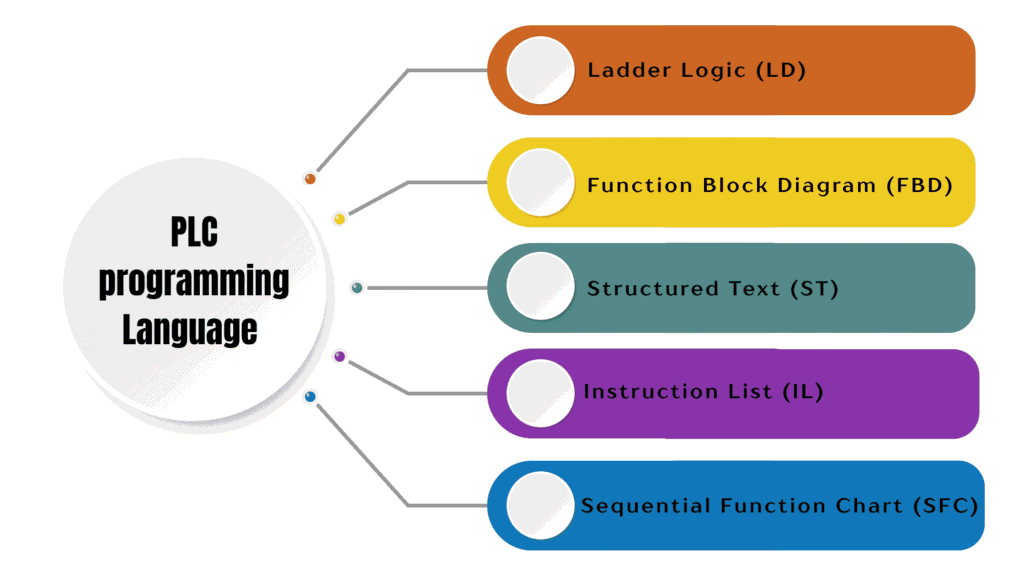
There are five standardized PLC language types, as defined by the IEC 61131-3 standard—the international standard for PLC programming.
The 5 Main PLC Language Types (IEC 61131-3)
Understanding these five standardized PLC programming languages gives you the flexibility to work across different brands and systems:
1. Ladder Logic (LD)
Ladder Logic is the most widely used PLC programming language. It resembles electrical relay logic diagrams and is popular because of its visual simplicity.
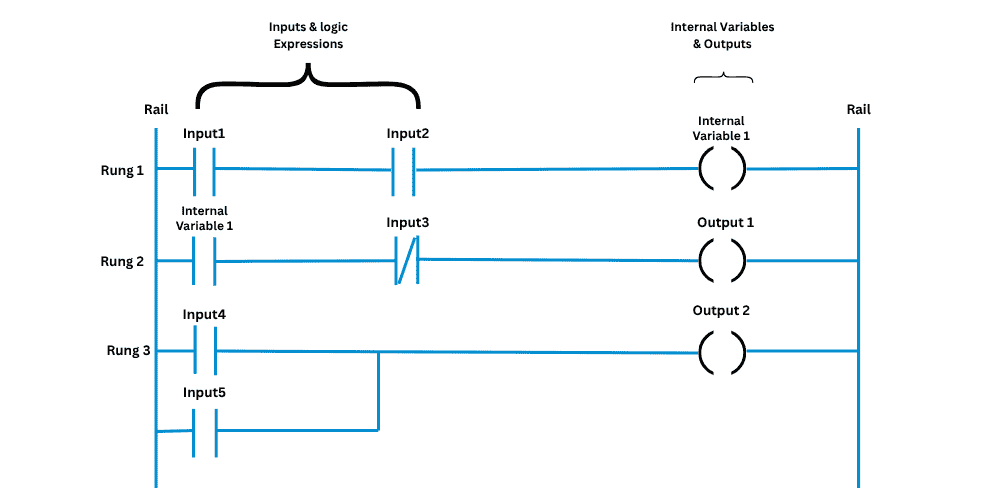
Key Features:
- Graphical, easy to learn
- Resembles traditional control wiring
- Great for discrete (ON/OFF) control
- Supported by all major PLC brands
Best For: Electricians, beginners, and logic-heavy applications
2. Function Block Diagram (FBD)
FBD is a graphical language that uses blocks to represent functions like timers, counters, PID controllers, etc.
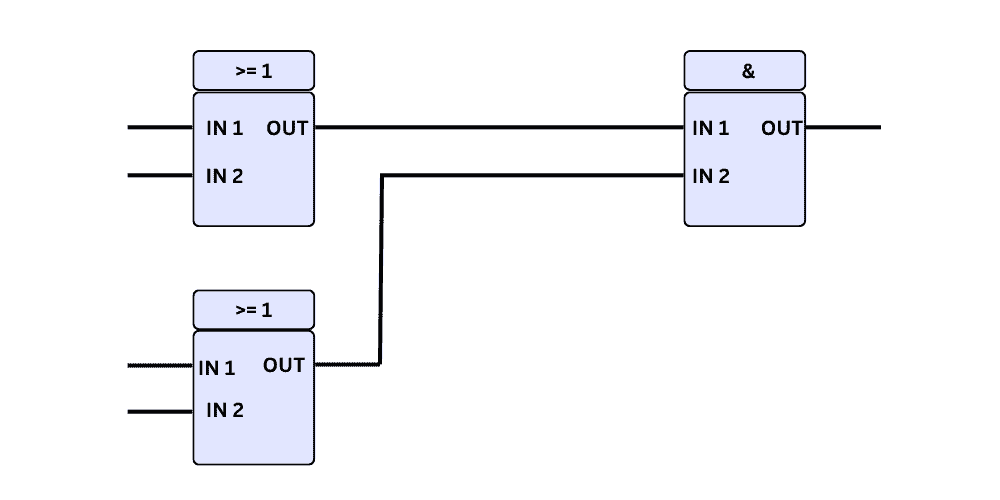
Key Features:
- Modular and visual approach
- Great for repetitive and process control tasks
- Easy to understand for engineers familiar with signal flow
Best For: Process automation, HVAC systems, water treatment
3. Structured Text (ST)
Structured Text is a high-level, text-based language similar to Pascal or C. It’s powerful and allows for complex algorithms and data handling.
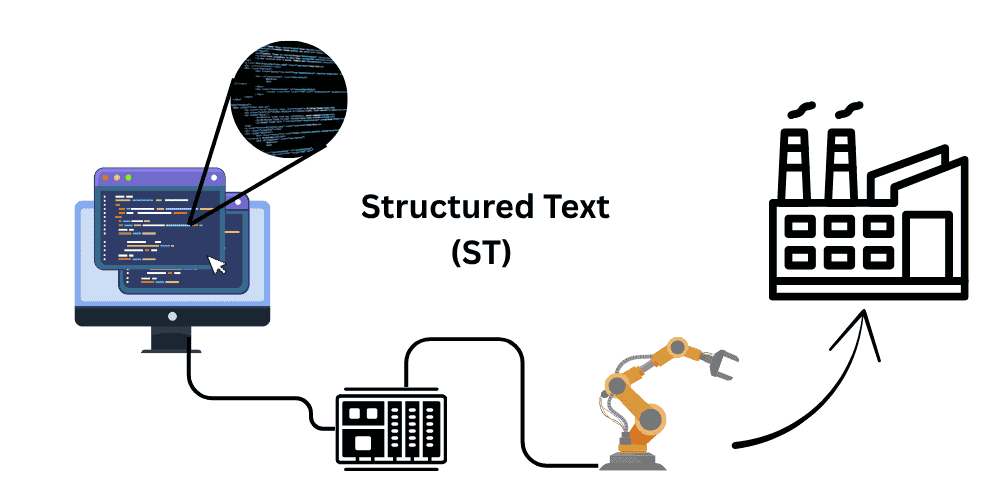
Key Features:
- Clean and structured syntax
- Supports loops, conditionals, and arithmetic
- Ideal for mathematical operations and complex control logic
Best For: Experienced programmers and complex logic systems
4. Instruction List (IL) (Obsolete in newer standards)
IL was a low-level text language resembling assembly language. It has been deprecated in the latest versions of the IEC standard but is still found in older systems.
Key Features:
- Fast and lightweight
- Difficult to read for beginners
Best For: Legacy systems and simple, fast code execution
5. Sequential Function Chart (SFC)
SFC breaks down control logic into steps and transitions, making it ideal for sequential processes.
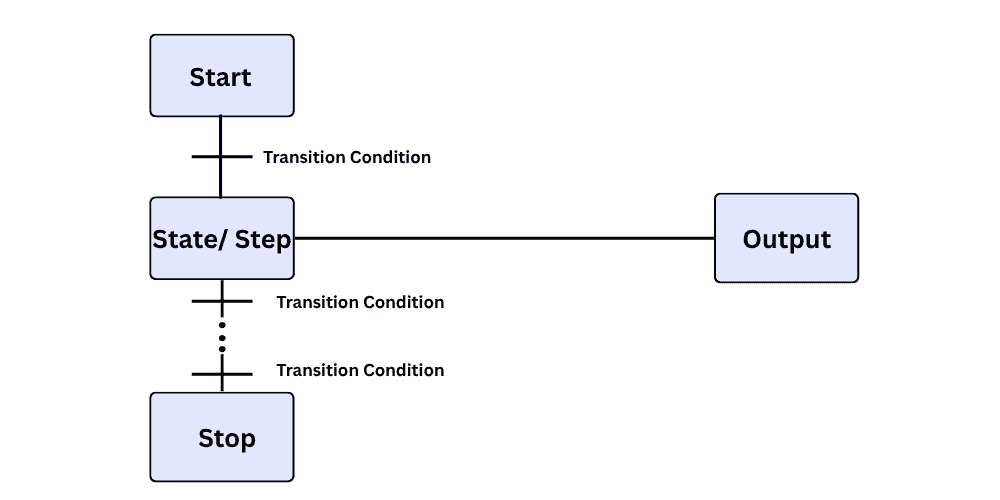
Key Features:
- Flowchart-like structure
- Clearly visualizes process stages
- Great for batch or step-based processes
Best For: Packaging, material handling, multi-stage operations
How to Choose the Right PLC Programming Language
When deciding which PLC programming language to use, consider the following:
| Criteria | Recommended Language |
| Simple ON/OFF logic | Ladder Logic |
| Repetitive tasks | Function Block Diagram |
| Advanced math or algorithms | Structured Text |
| Step-by-step processes | Sequential Function Chart |
| Older PLCs | Instruction List (legacy use only) |
Your choice of language may also depend on the brand of PLC (Siemens, Allen-Bradley, Mitsubishi, Schneider, etc.) and the software platform they provide.
Applications of PLC Language Types in Industry
Different industries prefer different PLC language types based on their needs:Manufacturing: Ladder Logic for machine control
Pharmaceuticals: FBD or SFC for process sequences
Energy Systems: Structured Text for data-intensive applications
Water Plants: FBD and Ladder Logic
OEM Machine Builders: Mix of Ladder and Function Blocks
Having a solid understanding of all five languages enhances your flexibility as an automation engineer or technician.
Learning PLC Programming Languages: Tips for Beginners
- Start with Ladder Logic – Most beginner-friendly and widely used
- Practice on Simulation Software – Use free tools like LogixPro or Factory I/O
- Understand the Process First – Logic should reflect the physical process clearly
- Explore Manufacturer Software – Learn Siemens TIA Portal, Allen-Bradley RSLogix, etc.
- Experiment with ST and FBD – These are essential in modern automation systems
Advantages of Learning Multiple PLC Language Types
- More Job Opportunities: Many roles require knowledge of more than one PLC language
- Cross-Brand Flexibility: Easily switch between different PLC brands
- Better Troubleshooting Skills: Understand existing systems regardless of the language
- Efficient Programming: Use the best language for each task
Future Trends in PLC Programming
With Industry 4.0 and smart automation on the rise, the world of PLC programming languages is evolving. Newer trends include:
- Integration with IoT devices
- Edge computing and cloud-based PLCs
- AI-assisted logic building
- Open-source PLC platforms
- Drag-and-drop no-code programming environments
Still, the core PLC language types remain essential for foundational knowledge and hands-on control.
FAQs About PLC Programming Languages
Q1: What is the best PLC programming language for beginners?
Ladder Logic is the easiest to learn and most widely used across industries.
Q2: How many types of PLC programming languages are there?
There are five main PLC language types standardized under IEC 61131-3: Ladder Logic, Function Block Diagram, Structured Text, Instruction List, and Sequential Function Chart.
Q3: Is Structured Text hard to learn?
It’s more advanced than Ladder Logic but is highly effective for complex applications. Anyone with basic programming knowledge can pick it up.
Q4: Can I use more than one PLC language in a project?
Yes. Many modern PLC platforms allow mixing languages in a single project, choosing the best one for each task.
Q5: Are PLC languages universal?
The logic and structure are standardized, but syntax and software tools may vary across brands like Siemens, Allen-Bradley, Mitsubishi, and Schneider.
Conclusion: Mastering PLC Programming Languages for Automation Success
Understanding PLC programming languages is key to building efficient and reliable automation systems. Each language type has its strengths—knowing when and how to use them gives you a serious advantage.
Whether you’re just starting with PLC basics or looking to advance into high-level logic and system integration, becoming fluent in multiple PLC language types will future-proof your skills in this fast-growing field.
Related Blogs
- PLC Working Principle: How PLC Works
- Top Advantages of PLC
- What is PLC Panel
- Modular PLC: Flexible Approach to Industrial Automation
- What Micro Size PLC Can Handle
- Understanding PLC Basics: Beginner Guide to PLC Basics
- AB PLC: The Power Behind Industrial Automation
- History of Programmable Logic Controller (PLC)
- Understanding PLC Input and Output
- PLC Applications: How PLC Powers Modern Industry
- Top PLC Manufacturers
- Logic Diagram PLC: Understanding PLC Ladder Logic and Programming Basics
- Understanding Different Types Of PLC