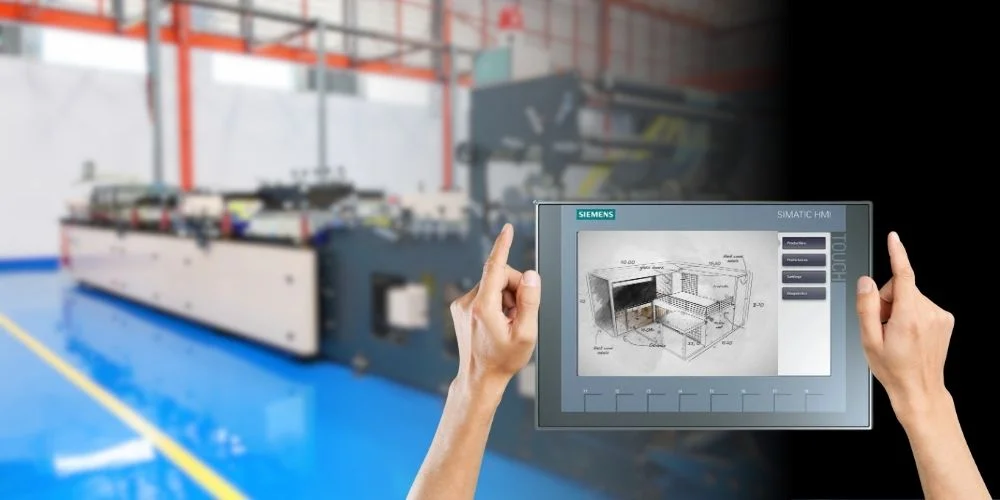
Human Machine Interface (HMI) screens play a crucial role in how operators interact with machines. Whether it’s a factory floor, power station, or water treatment plant, HMI technology helps make industrial processes smarter, safer, and more efficient.
Here’s a quick look at the real-world applications of HMI screens across different industries.
1. Manufacturing & Automation
In production environments, HMI screens are used to:
- Start/stop machines
- Monitor production rates
- Track downtime and alarms
- Adjust machine parameters like speed, temperature, or pressure
They’re often installed on control panels, packaging machines, and robotic arms to offer centralized control and visibility.
2. Energy & Power Plants
In energy systems like solar farms, wind turbines, or thermal power plants, HMIs:
- Display energy output
- Monitor grid connection
- Show battery status or fuel usage
- Alert operators to faults or overloads
HMI screens help technicians respond faster to faults and optimize system efficiency.
3. Water & Wastewater Treatment
HMI applications in this sector include:
- Monitoring water flow, tank levels, and pump status
- Controlling filtration or chemical dosing systems
- Tracking maintenance schedules
- Displaying system-wide trends and alerts
With an HMI, operators can manage complex systems from a single screen—often remotely.
4. Food & Beverage Industry
In food processing and packaging plants, HMI screens:
- Control mixers, ovens, and batch systems
- Set timers and temperatures for recipes
- Track hygiene and cleaning cycles
- Show real-time production output
HMIs also help with traceability and compliance in highly regulated environments.
5. Pharmaceutical Manufacturing
In pharma, precision and documentation are critical. HMIs assist with:
- Recipe management and process control
- Clean-in-place (CIP) and sterilization steps
- Alarm logging and operator authentication
- Audit trails for regulatory compliance
GMP-compliant HMIs support both production and validation workflows.
6. Packaging and Labeling Machines
In packaging lines, HMI screens allow users to:
- Adjust labeling speeds and positions
- Switch between product formats
- Monitor reject rates and performance
- Diagnose mechanical issues quickly
Changeovers become quicker and more accurate with touchscreen interfaces.
7. Building Automation Systems
HMI screens are also used in smart buildings for:
- HVAC system control
- Lighting and energy monitoring
- Elevator and access control
- Fire and safety systems status
This gives facility managers a centralized interface for real-time monitoring and remote adjustments.
8. Transportation and Logistics
HMI screens are integrated into:
- Baggage handling systems
- Automated storage & retrieval systems (AS/RS)
- Railway signal control
- Vehicle diagnostics in fleet management
They offer operators a clear visual of status, alerts, and automation functions on the go.
9. Automotive Industry
HMI screens are used extensively in:
- Assembly lines to monitor robotic arms, conveyors, and welding stations
- Testing stations for real-time diagnostics of engines and components
- Operator interfaces in vehicle infotainment and dashboard systems (in-vehicle HMI)
In automotive plants, they simplify complex processes and reduce errors during assembly and quality checks.
10. Oil & Gas
In oil rigs and refineries, HMI screens are used for:
- Monitoring drilling pressure, flow, and temperature
- Alarm management for hazardous conditions
- Remote control of valves and pumps
- Supervisory control in SCADA systems
They provide safe and centralized control in high-risk environments.
11. Aerospace & Defense
In this high-tech field, HMI screens:
- Operate simulation and testing systems
- Monitor control rooms for UAVs and satellite systems
- Control radar, missile launch, and communication infrastructure
Precision, speed, and reliability make HMIs a core part of mission-critical operations.
12. Textile Industry
HMIs in textile plants help with:
- Monitoring loom speeds and motor temperatures
- Pattern and color management in digital textile printing
- Real-time display of production output and machine faults
They enhance consistency in fabric quality and minimize downtime.
13. Mining and Metals
Heavy-duty HMI screens are used to:
- Operate crushers, conveyors, and drilling systems
- Monitor mineral processing systems
- Control ventilation and underground equipment
Dustproof, shock-resistant HMIs ensure reliable performance in harsh mining environments.
14. Renewable Energy Systems
In solar, wind, and hydro systems, HMIs help:
- Track energy generation and system health
- Control battery storage systems
- Show power factor, voltage levels, and alerts
Operators can remotely manage decentralized energy sources through cloud-connected HMI platforms.
15. Agriculture & Smart Farming
HMI screens are now seen in:
- Automated irrigation systems
- Grain handling and drying systems
- Greenhouse control (temperature, humidity, light)
They make modern agriculture more precise and data-driven.
16. Printing & Packaging Presses
In high-speed presses and die-cutters, HMIs:
- Display roller pressure and speed
- Allow quick recipe changes for packaging types
- Show ink levels, print errors, and feed status
This reduces setup time and waste, improving production consistency.
17. Semiconductor Manufacturing
In cleanroom fabs, HMIs are used for:
- Process chamber control (etching, lithography, etc.)
- Real-time defect tracking
- Monitoring temperature-sensitive operations
They must be ultra-reliable and compatible with cleanroom standards.
Final Thoughts
HMI screens are more than just fancy displays—they are the control hub of modern industrial and infrastructure systems. From shop floor to power plant, they improve visibility, boost safety, reduce errors, and drive efficiency. As industries evolve, the applications of HMI will only expand further with the rise of IIoT, edge computing, and remote operations.
Related Blogs